How long does the pill take to work?
The NHS says the pill may protect you straight away, or you may need extra contraception for 2, 7 or 9 days, depending on the type and start date.
Updated: 2026-10-05 • Published: 2026-10-05 • 4 sources cited
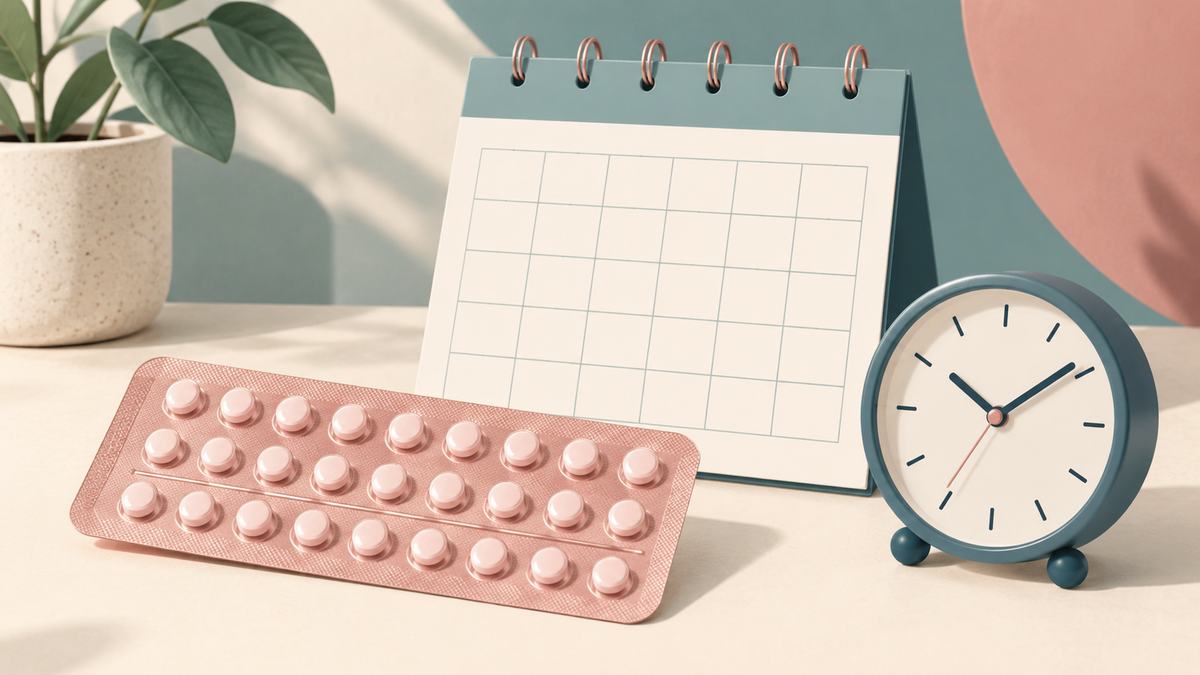
The time it takes for a contraceptive pill to protect against pregnancy depends on which pill you use and when in your menstrual cycle you start it. The NHS gives different starting rules for the combined pill and different types of progestogen-only pill.
Starting at the beginning of your menstrual cycle can mean immediate protection with several pill types. Starting later can mean using another form of contraception, such as condoms, until you have taken the pill for the period specified in NHS guidance.
This guide covers starting the combined pill, progestogen-only pills, special rules after pregnancy, and related guidance for the patch and vaginal ring. A doctor, nurse, pharmacist or sexual health clinic can advise if you are unsure what applies to you.
How long does the combined pill take to work?
The NHS says that if you start the combined pill during the first 5 days of your menstrual cycle, with day 1 being the first day of your period, you are protected from pregnancy straight away.
If you start the combined pill more than 5 days after the start of your period, NHS guidance says you are not protected straight away. You need another type of contraception, such as condoms, until you have taken the pill for 7 days.
The NHS says there are separate starting instructions for Zoely and Qlaira. If either is started on the first day of your period, protection is straight away. Starting later means using another type of contraception for the period specified for that pill.
How long does the progestogen-only pill take to work?
For the traditional progestogen-only pill and the desogestrel pill, the NHS says starting on days 1 to 5 of your menstrual cycle gives protection straight away. Starting more than 5 days after your period begins means protection is not immediate.
If you start a traditional progestogen-only pill or desogestrel pill later than day 5, NHS guidance says to use extra contraception such as condoms until you have taken the pill for 2 days.
The drospirenone pill has a different rule. The NHS says you are protected straight away if you start it on day 1 of your cycle. At any other time, use extra contraception such as condoms until you have taken it for 7 days.
Do some pill brands and types have different rules?
Yes. NHS guidance gives separate starting rules for Zoely and Qlaira. Starting either on the first day of your period gives immediate protection, but starting later requires another type of contraception until you have taken Zoely for 7 days or Qlaira for 9 days.
Progestogen-only pills also differ by type. The traditional progestogen-only pill and desogestrel pill generally require 2 days of extra contraception when started after day 5, while the drospirenone pill generally requires 7 days when started at another time than day 1.
The NHS advises reading the information leaflet that comes with your pills. If you are not sure when to start, or you are switching from another type of hormonal contraception, speak to a doctor, nurse or pharmacist.
What if you start the pill after having a baby, a miscarriage or an abortion?
For the progestogen-only pill after having a baby, the NHS says starting within the first 20 days after giving birth gives immediate protection against pregnancy. Starting 21 days after giving birth or later means extra contraception is needed for a period.
From 21 days after giving birth, NHS guidance says to use extra contraception such as condoms until you have taken the traditional progestogen-only pill or desogestrel pill for 2 days. For the drospirenone pill, use extra contraception until you have taken it for 7 days.
After a miscarriage or abortion, the NHS says a traditional progestogen-only pill or desogestrel pill started on days 1 to 5 gives immediate protection, while drospirenone started on day 1 does so. Later starts require extra contraception for 2 or 7 days respectively.
What about the contraceptive patch and vaginal ring?
The NHS says the contraceptive patch should protect against pregnancy straight away if you start it between the first and fifth day of your period. If you want to start the patch after the fifth day, speak to a doctor or nurse for advice.
For the vaginal ring, the NHS says that if you are not already using hormonal contraception, you can usually start from day 1 to day 5 of your period and should be protected from pregnancy straight away.
If you plan to start the vaginal ring after day 5, NHS guidance says to speak to a doctor, nurse or pharmacist. You will need additional contraception, such as a condom, for 7 days.
How well does the pill work once it is protecting you?
The NHS says the combined pill is more than 99% effective when used correctly all the time. If it is not used correctly, it is 91% effective, and about 9 in 100 women will get pregnant in a year.
The progestogen-only pill is also over 99% effective if taken correctly all the time, according to the NHS. If it is not taken correctly all the time, it is 91% effective, meaning around 9 in 100 women will get pregnant in a year.
NHS guidance notes that incorrect use can include missing a pill or taking it at the wrong time of day. For the combined pill, the NHS says you need to take it at the same time every day for it to work properly.
What you can do when you start the pill
- 1Check which type of contraceptive pill you are starting.
- 2Check which day of your menstrual cycle you are starting it.
- 3Follow the NHS starting rule that applies to your pill type.
- 4Use extra contraception such as condoms for the stated period if your starting time does not give immediate protection.
- 5Read the information leaflet that comes with your pills.
- 6Speak to a doctor, nurse or pharmacist if you are unsure when to start or how the guidance applies to you.
NHS guidance says combined pills, progestogen-only pills and different pill types do not all have identical starting rules, so the exact timing matters when deciding whether you are protected immediately.
If you are switching from another form of hormonal contraception, the NHS advises speaking to a doctor, nurse or pharmacist because you may need specific guidance about when protection begins.
Common Misconceptions & Clinical Facts
"Every contraceptive pill takes the same number of days to work."
The NHS gives different starting rules for the combined pill, traditional and desogestrel progestogen-only pills, drospirenone, Zoely and Qlaira.
"The pill always protects against pregnancy as soon as you take the first tablet."
NHS guidance says protection can be immediate with certain start dates, but later starts may require extra contraception for 2, 7 or 9 days depending on the pill.
"Starting later in your cycle does not change what you need to do."
The NHS says starting after the specified point in your cycle can mean you are not protected straight away and need extra contraception such as condoms.
Practical context and next steps
The NHS says that if there is a chance you could already be pregnant when starting the combined pill, you should take a pregnancy test 3 weeks after the last time you had unprotected sex. The NHS also advises speaking to a doctor, nurse or pharmacist if you are unsure when to start.
The NHS says some medicines and herbal remedies can affect how the combined pill or progestogen-only pill works, meaning it may not stop you getting pregnant. For the combined pill, NHS guidance advises asking a doctor or pharmacist for advice about specified medicines and says another type of contraception may be needed.
A decision checklist for this topic
Before acting on anything you read here, run through this short check.
The combined pill gives immediate protection if started in the first 5 days of your cycle, according to NHS guidance.
Starting the combined pill after day 5 generally means using another type of contraception until you have taken it for 7 days.
Traditional and desogestrel progestogen-only pills started on days 1 to 5 give immediate protection.
Starting a traditional or desogestrel progestogen-only pill after day 5 means using extra contraception until you have taken it for 2 days.
The drospirenone pill protects straight away when started on day 1 and otherwise requires extra contraception until you have taken it for 7 days.
Zoely and Qlaira have separate NHS starting instructions, including different periods of extra contraception when started after day 1.
When to get professional or urgent help
•Speak to a doctor, nurse or pharmacist if you are not sure when to start your contraceptive pill.
•Speak to a pharmacist, doctor or nurse if you are changing from another type of hormonal contraception to the contraceptive patch or vaginal ring.
•Speak to a pharmacist, sexual health clinic or GP, or call 111, if you think you may need emergency contraception.
•Speak to a doctor or nurse for advice if you want to start the contraceptive patch after the fifth day of your period.
Safety note: This is general education based on NHS guidance about starting hormonal contraception. The information leaflet that comes with your pills contains instructions for your medicine, and the NHS advises speaking to a doctor, nurse or pharmacist if you are unsure about when to start or what applies to you.
The main point is that protection can be immediate or delayed depending on the pill and when you start it. If the rule for your pill is unclear, NHS guidance supports checking the leaflet and asking a doctor, nurse, pharmacist or sexual health clinic for advice.
Questions & Clear Answers
NHS guidance says you are protected straight away if you start the combined pill in the first 5 days of your menstrual cycle. If you start more than 5 days after your period begins, use another type of contraception until you have taken the pill for 7 days.
For the traditional progestogen-only pill and the desogestrel pill, the NHS says starting more than 5 days after the start of your period means you are not protected straight away, and you need extra contraception such as condoms until you have taken the pill for 2 days.
The NHS says the drospirenone pill protects against pregnancy straight away if you start it on day 1 of your menstrual cycle. If you start it at any other time, use extra contraception such as condoms until you have taken it for 7 days.
NHS guidance says this depends on the pill and when you start it. Some starting times give immediate protection, while others require extra contraception such as condoms for 2, 7 or, for Qlaira, 9 days.
The NHS says the pill may protect you from pregnancy straight away when started at the recommended point in your cycle. If you start later, the waiting period depends on the pill: some progestogen-only pills need 2 days of extra contraception, several pills need 7 days, and Qlaira needs 9 days when started after day 1.
References & Sources
Openlywell articles are compiled with reference to published guidance from international public-health authorities, professional colleges and peer-reviewed literature.
- [1]NHS — How to take the combined pill, page last reviewed 15 February 2024
- [2]NHS — How to take the progestogen-only pill, page last reviewed 22 February 2024
- [3]NHS — How to use the contraceptive patch, page last reviewed 9 February 2024
- [4]NHS — How to use the vaginal ring, page last reviewed 9 February 2024
Was this article helpful?
Your anonymous feedback helps our clinical and editorial team keep guides accurate and clear.
Related Guides & Further Reading
More in BlogEmergency Contraception: Options, Timing and What to Do Next
Emergency contraception explained: the morning-after pill, ulipristal acetate, the copper IUD, why timing and ovulation matter, and what to do after unprotected sex.
Types of Birth Control: How to Compare Contraception Options
Compare the main types of birth control — implants and intrauterine contraception, combined and progestogen-only methods, barriers, fertility awareness and permanent options.
How to Put On a Condom: Correct Use, Protection and Common Mistakes
How to put on a condom correctly, what condoms do and do not prevent, lubricant compatibility, size and fit, the mistakes that cause failure, and what to do after a break.