Do Condoms Expire? Shelf Life, Storage and How to Check
Do condoms expire? Yes — every condom carries an expiry date, and latex degrades with age, heat and friction. How long condoms last, where the date is printed, and how to tell if one is no longer safe to use.
Updated: 2026-09-01 • Published: 2026-08-31 • 3 sources cited
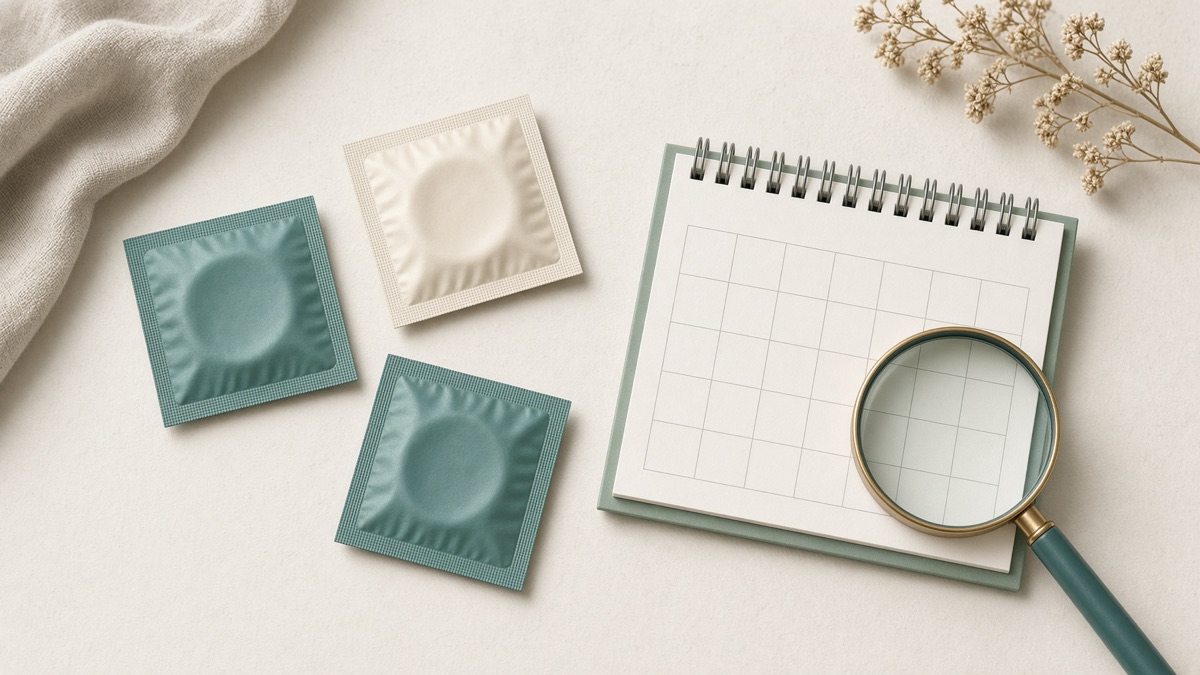
Condoms are not a permanent product. They are a thin polymer barrier under constant slow chemical attack from oxygen, heat and light, and the manufacturer’s expiry date is an estimate of how long the material will still perform to specification.
The date matters more than most people assume. An expired condom does not usually fail dramatically — it becomes brittle or sticky, loses elasticity, and tears under stress it would previously have survived. That failure happens at the least convenient moment.
The expiration date matters because condoms are engineered barriers whose materials gradually change over time. An expired condom may still look normal, but aging can reduce elasticity and strength, making it less dependable for pregnancy and STI prevention.
How long condoms last
A latex condom in its sealed foil is generally rated for up to five years from the date of manufacture. Polyurethane and polyisoprene condoms are broadly similar. Condoms containing spermicide are the notable exception and are usually given a shorter life, often around three years, because the spermicide itself degrades and can attack the latex as it does so.
These figures assume storage at room temperature, out of direct light. They are not a promise about a condom that has spent two summers in a car.
Condom shelf life varies by material, manufacturer and whether additional substances such as spermicide are included, so there is no single lifespan that applies to every product. The printed expiration date on the individual package is more reliable than trying to estimate how long a condom has been stored.
Where the expiry date is printed
The date is stamped on the individual foil wrapper as well as the box, usually in MM/YYYY format alongside a batch number. If a wrapper carries two dates, the earlier one is normally the manufacture date and the later one the expiry.
If the print has rubbed off the foil and you no longer have the box, treat the condom as expired. Guessing is not worth it for something that costs pennies to replace.
The date is commonly printed or embossed on each individual foil wrapper as well as on the outer box. Checking the wrapper itself is useful when condoms have been removed from their original packaging, because the box date cannot help identify a loose condom if products from different packages have been mixed.
Storage does more damage than time
Heat is the main enemy. A wallet carried in a back pocket subjects a condom to body heat and constant flexing; a glovebox in summer can exceed the temperatures the material was tested at. Both age a condom far faster than a drawer would.
Friction is the second problem. A foil that has been rubbing against keys or coins can develop pinholes too small to see, which lets air in and starts the degradation early. Store condoms flat, cool, dark and away from sharp objects — a bedside drawer is genuinely the right answer.
Heat, sunlight and repeated friction can degrade condoms before their printed expiration date. A cool, dry drawer is generally a better long-term storage place than a car, windowsill or wallet where temperature changes, pressure and constant movement can stress the packaging and material.
How to check a condom before use
Read the date on the wrapper. Then press the foil gently between finger and thumb: you should feel a small cushion of trapped air. If the packet is flat, the seal has gone and air has been reaching the condom.
Look at the wrapper for creases, discolouration or stiffness, and once open, check the condom itself. A usable condom is supple and evenly coloured. One that feels dry, stiff, sticky, gritty, or that has changed colour, should be thrown away regardless of what the date says.
Before opening one, look for tears, punctures, leaking lubricant, unusual discoloration or a wrapper that no longer appears sealed. After opening, a condom that feels unusually dry, sticky, stiff, brittle or damaged should be discarded rather than tested during use.
What actually happens if you use an expired condom
The risk is breakage and slippage rather than any toxic effect. Degraded latex has lost elasticity, so it tears under normal stress — which means the protection against both pregnancy and sexually transmitted infections is gone at the moment you were relying on it.
An expired condom is still better than no condom if it is genuinely the only option available, but it should be treated as a method that may well fail, and the aftermath planned for accordingly.
An expired condom does not automatically break, but its reliability can no longer be assumed to match an in-date product. Degraded material may be more likely to tear or fail under friction, which is why replacing an expired condom is safer than judging it by appearance alone.
What to do if one breaks
Stop, withdraw and take stock. For pregnancy risk, emergency contraception is more effective the sooner it is taken, and the copper IUD is the most effective option within its window.
For HIV risk, post-exposure prophylaxis must be started within 72 hours and ideally much sooner — contact a sexual health service or emergency department the same day. For other infections, note the date and arrange testing once the relevant window period has passed.
If a condom breaks, slips off or leaks, the next steps depend on pregnancy possibility and STI exposure. Emergency contraception and certain post-exposure treatments are time-sensitive, so contacting a pharmacist, clinic or healthcare professional promptly can preserve more options; STI testing may also be appropriate even when there are no symptoms.
What you can do
- 1Check the wrapper date every time — it takes a second and is the whole safeguard.
- 2Feel for the air cushion in the foil before opening it.
- 3Move condoms out of wallets, pockets and gloveboxes into a cool, dark drawer.
- 4Buy smaller quantities more often rather than stockpiling a box you will not finish.
- 5Replace any condom that feels dry, sticky or stiff, whatever the printed date says.
Keep a few condoms in a consistently cool, dry place and periodically check the dates so expired ones can be replaced before they are needed. Open packages carefully with fingers rather than teeth, scissors or sharp nails, and use lubricants that are compatible with the condom material to reduce unnecessary friction.
Common Misconceptions & Clinical Facts
"The expiry date is a legal formality — condoms are fine for years after."
The date reflects material testing. Latex genuinely loses elasticity over time, and breakage rates rise once it does.
"A condom kept in a wallet is fine as long as it is in date."
Body heat and constant flexing degrade a condom faster than shelf storage. A wallet condom can fail well inside its printed date.
"Doubling up on old condoms compensates for the risk."
Two condoms rub against each other and are more likely to fail than one. Never wear two at once — use one condom that is in date and correctly stored.
Practical context and next steps
If you rarely need condoms, buy a small pack rather than a bulk box. The economics of buying in quantity stop working when most of the box expires unused.
If you keep condoms somewhere for convenience rather than ideal storage, rotate them: replace the carried ones every few months and keep the main supply somewhere cool.
A condom kept in a wallet briefly is not automatically ruined, but carrying the same one through repeated heat, bending and friction for long periods is different from storing it safely at home. When the storage history is uncertain or the wrapper looks compromised, using a fresh condom is the more dependable choice.
A decision checklist for this topic
Before acting on anything you read here, run through this short check.
Is the date on this wrapper still in the future?
Does the foil have a cushion of air in it?
Has this condom been stored somewhere hot, bright or abrasive?
Does it feel supple, or dry and sticky?
If it fails, do I know what I would do next and how quickly?
When to get professional or urgent help
•A condom broke and there is a pregnancy risk — emergency contraception is time-critical.
•A condom broke and HIV exposure is possible — PEP must start within 72 hours.
•You develop irritation, discharge or sores after a condom failure.
•You experience repeated condom breakage, which usually indicates a fit, lubricant or technique issue worth sorting out with a sexual health service.
Safety note: If a condom breaks or slips during sex, emergency contraception and, where relevant, HIV PEP are both time-limited — PEP needs to be started within 72 hours. Do not wait to see what happens.
After a condom failure, seek timely professional guidance when pregnancy is possible, HIV exposure may have occurred or there is concern about another STI. Medical care is also appropriate for genital injury, significant pain or a condom that remains inside the vagina or rectum and cannot be removed easily.
Questions & Clear Answers
Yes. Every condom carries a printed expiry date on the individual wrapper. Latex loses elasticity over time, so an expired condom is significantly more likely to tear during use.
Condoms expire, and heat expires them faster than the calendar does. Check the wrapper date, feel for the air cushion, and keep them somewhere cool and dark.
References & Sources
Openlywell articles are compiled with reference to published guidance from international public-health authorities, professional colleges and peer-reviewed literature.
- [1]World Health Organization / UNFPA — Male latex condom: specification, prequalification and guidelines for procurement
- [2]NHS — Condoms
- [3]Centers for Disease Control and Prevention — Condom effectiveness and use
Was this article helpful?
Your anonymous feedback helps our clinical and editorial team keep guides accurate and clear.
Related Guides & Further Reading
More in BlogHow to Put On a Condom: Correct Use, Protection and Common Mistakes
Condoms create a physical barrier that reduces pregnancy risk and exposure to many sexually transmitted infections. They work best when a new condom is used correctly from start to finish for each act and with lubricant that is compatible with the condom material.
PrEP vs PEP: The Difference, Who They Are For and Why Timing Matters
PrEP and PEP are medicines that prevent HIV in different situations. PrEP is used before possible exposure by HIV-negative people who may benefit from ongoing prevention. PEP is emergency medication after a possible exposure and must be started within 72 hours; sooner is better.
Can You Get an STI From Oral Sex? What Transmits and How to Reduce Risk
Oral sex can transmit several STIs, including gonorrhoea, syphilis, herpes and HPV. HIV risk from oral sex is much lower than from receptive anal or vaginal sex, but “lower HIV risk” does not mean “no sexual-health risk.”